

How To Encrypt A Flash Drive Windows 10
On Windows 10, if you keep sensitive files on your device, it is crucial to take the necessary steps to protect them, and this is when BitLocker comes in handy. BitLocker is a feature that has been around for a long time, and it provides a way to encrypt the data on the hard drive to prevent unauthorized access to your information.
In a nutshell, encryption is the process of making any data unreadable without proper authority. When yous use encryption to scramble your information, it will proceed to be unreadable even when sharing it with other people. Only you with the proper encryption fundamental can decrypt the data to make it usable.
If you've never use BitLocker before, the feature offers two methods of encryption, including hardware-based encryption using Trusted Platform Module (TPM) flake and software-based encryption using a password or USB flash drive to decrypt the bulldoze and continue booting into Windows 10. Also, the characteristic allows protecting the information on the installation drive, secondary storage, and removable media with "BitLocker To Become."
In this Windows ten guide, we will walk you lot through the steps to fix up BitLocker on your reckoner to brand sure your sensitive data stays secure.
- Before using BitLocker
- How to check if device has TPM support to employ BitLocker
- How to enable (hardware-based) BitLocker on the operating organisation drive
- How to enable (software-based) BitLocker on the operating system bulldoze
- How to enable BitLocker on fixed data drives
- How to enable BitLocker To Get on removable drives
- How to disable BitLocker on Windows 10
Earlier using BitLocker
Hither are a few details you need to know before using these instructions:
- BitLocker Drive Encryption is bachelor on Windows 10 Pro and Enterprise. Windows 10 Habitation edition has its version of BitLocker on select devices. You tin use these steps to set it up.
- Trusted Platform Module (TPM) bit is needed for the best result. This is a special chip that enables the device to back up avant-garde security features.
- BitLocker is available without TPM by using software-based encryption, but it requires some extra steps for additional authentication.
- Estimator firmware must support TPM or USB devices during startup. If the feature isn't available, check the calculator manufacturer for the Basic Input Output System (BIOS) or Unified Extensible Firmware Interface (UEFI) update.
- Estimator's hard drive must have two partitions, including a system segmentation with the necessary files to start the system and a division with the Windows 10 installation. If the device does not meet the requirements, BitLocker will create them automatically. Also, the hard drive partitions must be formatted with the NTFS file organization.
- The encryption process is not complicated, only it can accept a lot of time, depending on the drive's amount of data and size.
- Keep the computer connected with an uninterrupted power supply (UPS) throughout the entire procedure.
Although BitLocker does a good task securing your data, any arrangement modify carries its risks. It's e'er recommended that you lot make a full backup of your system earlier proceeding with this guide.
How to bank check if device has TPM support to use BitLocker
To check if a reckoner has TPM on Windows x, apply these steps:
- Open Kickoff.
- Search for Device Manager and click the top result to open up the app.
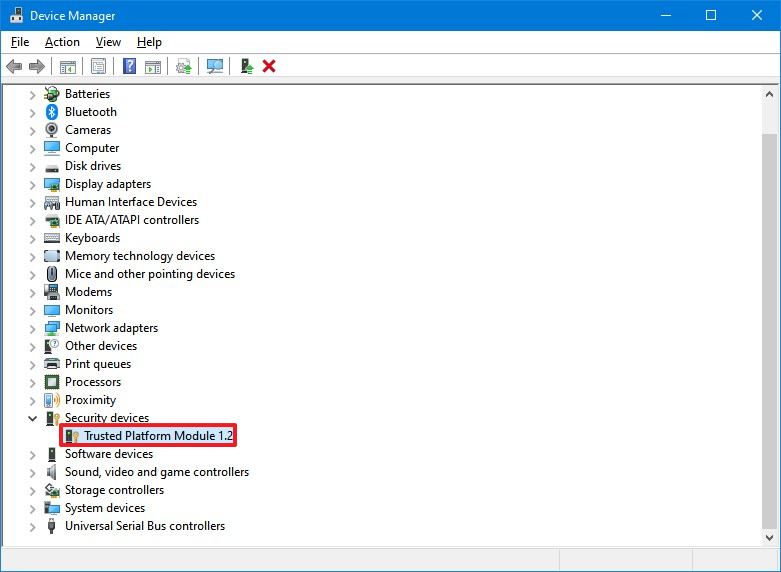
- Aggrandize the Security devices co-operative.
-
Confirm the item that reads "Trusted Platform Module" with the version number.
 Source: Windows Cardinal
 Quick note: The TPM version must be version 1.2 or later on to back up BitLocker.

Alternatively, you lot can also bank check your manufacturer's support website for details on whether the computer includes the security bit and the instructions to enable the security characteristic.
If you take a Surface device, likely it includes a Trusted Platform Module with back up for BitLocker encryption.
How to enable (hardware-based) BitLocker on the operating organisation drive
To enable BitLocker on a device with TPM, use these steps:
- Open Beginning.
- Search for Control Panel and click the tiptop issue to open the app.
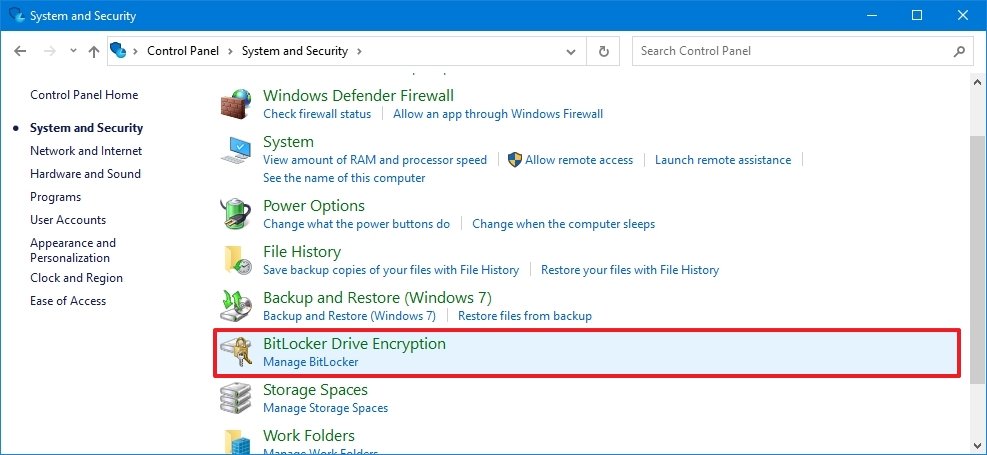
- Click on System and Security.
-
Click on BitLocker Drive Encryption.
 Source: Windows Central
 -
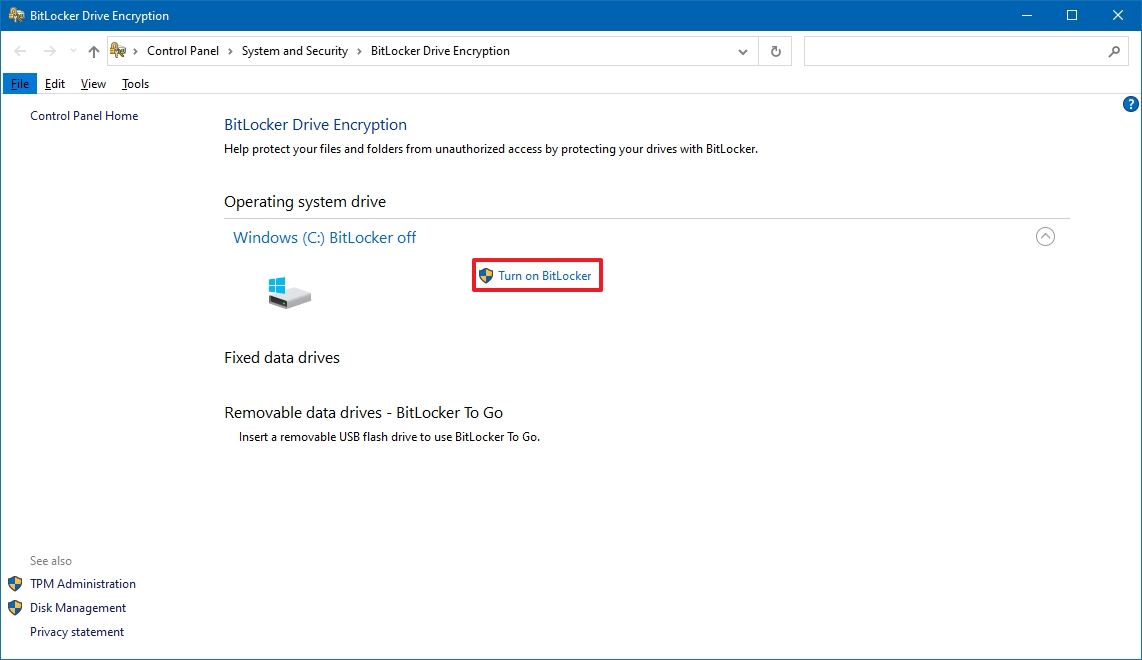
Under the "Operating system bulldoze" section, click the Turn on BitLocker pick.
 Source: Windows Key
 -
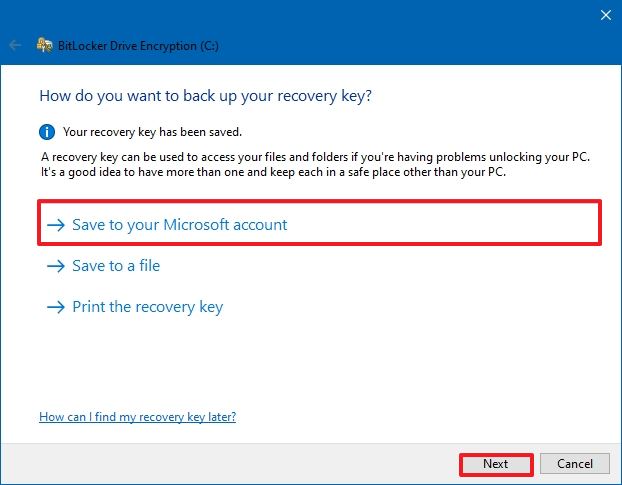
Select the pick to salve the recovery central:
- Save to your Microsoft account.
- Salve to a file.
- Impress the recovery.
Quick tip: If y'all trust the deject, choose to salve your recovery key in your Microsoft account using the Save to your Microsoft account pick. Y'all tin can always think the encryption key at this OneDrive location.
-
Click the Side by side push.
 Source: Windows Central
 -
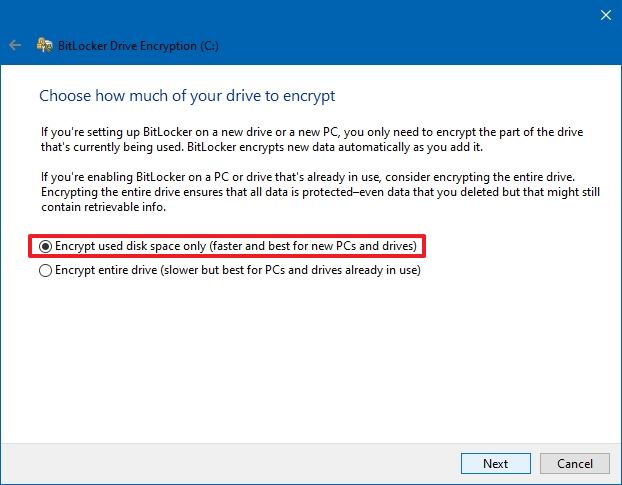
Select how much the bulldoze space to encrypt:
- Encrypt used disk space only (faster and best for new PCs and drives).
- Encrypt the entire drive (slower merely best for PCs and drives already in apply).
 Source: Windows Primal
 -
Choose between the ii encryption options:
- New encryption mode (best for fixed drives on this device).
- Compatible way (best for drives that tin can be moved from this device).
 Source: Windows Fundamental
 - Click the Adjacent push.
-
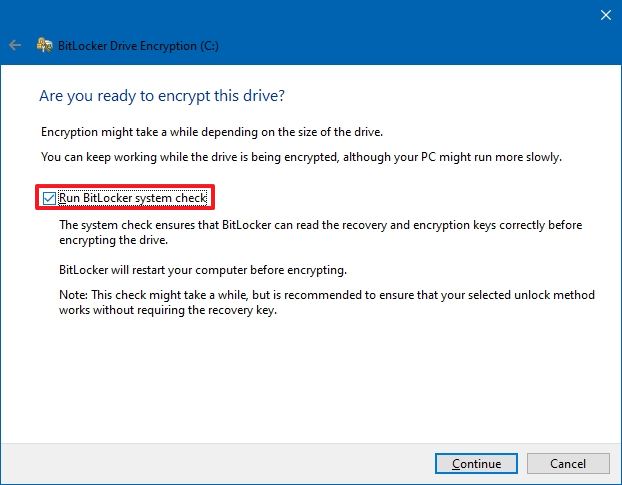
Check the Run BitLocker organisation check choice.
 Source: Windows Fundamental
 - Click the Continue button.
- Click the Restart now button.


After y'all complete the steps, the device will restart, BitLocker volition enable, and you volition not exist prompted to enter a decryption countersign to continue starting Windows 10.
Although the device will boot quite fast, on Control Panel > System and Security > BitLocker Drive Encryption, you will discover that BitLocker is still encrypting the bulldoze. Depending on the selection you selected and the size of the bulldoze, this procedure can accept a long time, simply you can go on to work on the computer.
After the encryption process is complete, the drive will include a lock icon, and the characterization volition read BitLocker on.
BitLocker options
Once the drive encryption is enabled, several options volition become available, including:
- Suspend protection: This choice will finish protecting your files. Typically, you would use this choice when upgrading to a new version of Windows 10, firmware, or hardware. If you don't resume the encryption protection, BitLocker volition resume automatically during the next reboot.
- Dorsum upwards your recovery key: If you lose the recovery fundamental and are nevertheless signed into your account, yous can utilise this selection to create a new backup of the primal with the options mentioned in Stride 6.
- Change password: Creates a new encryption password, simply you volition still need to supply the current countersign to make the change.
- Remove password: You cannot use BitLocker without a form of authentication. You can remove a password simply when yous configure a new method of hallmark.
- Turn off BitLocker: Decrypts all the files on the bulldoze. Also, decryption may accept a long fourth dimension to complete its process depending on the storage size, merely yous can still use your computer.
How to enable (software-based) BitLocker on the operating system bulldoze
In the case that the figurer does not have a Trusted Platform Module chip, you won't be able to configure BitLocker on Windows 10. However, you can notwithstanding use encryption if you lot use the Local Grouping Policy Editor to enable additional authentication at startup. In one case the characteristic is enabled, you lot will need to provide a countersign or USB flash bulldoze with the recovery key to unlock the drive and continue booting into Windows 10.
Enable policy without TPM support
To configure BitLocker on devices without a TPM chip, use these steps.
- Open Start.
- Search for gpedit and click the top result to open the Local Group Policy Editor.
-
Browse the post-obit path:
Computer Configuration > Administrative Templates > Windows Components > BitLocker Drive Encryption > Operating System Drives -
On the right side, double-click the Require additional hallmark at startup policy.
 Source: Windows Central
 - Select the Enabled option.
-
Bank check the "Permit BitLocker without a compatible TPM (requires a password or a startup key on a USB wink drive)" option.
 Source: Windows Central
 - Click the Apply push button.
- Click the OK button.


In one case you complete the steps, BitLocker tin can be configured on the computer to protect your data.
Enable BitLocker
To enable BitLocker on your device, use these steps:
- Open Start.
- Search for Control Panel and click the tiptop effect to open up the app.
- Click on System and Security.
-
Click on BitLocker Drive Encryption.
Source: Windows Central -
Nether the "Operating system drive" section, click the Plow on BitLocker option.
Source: Windows Central -
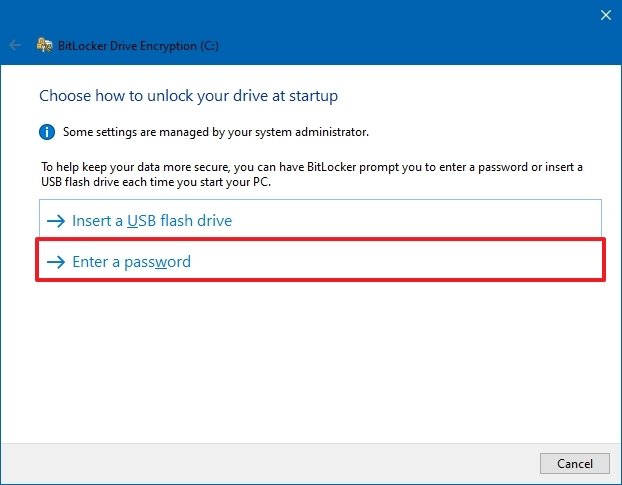
Select the encryption to unlock method:
- Insert a USB flash drive — requires a flash bulldoze to unlock the device and boot into Windows 10.
- Enter a password — requires a password before booting into Windows 10 (recommended).
 Source: Windows Primal
 -
Create and confirm the countersign to unlock BitLocker and admission your device.
 Source: Windows Primal
 - Click the Next push.
-
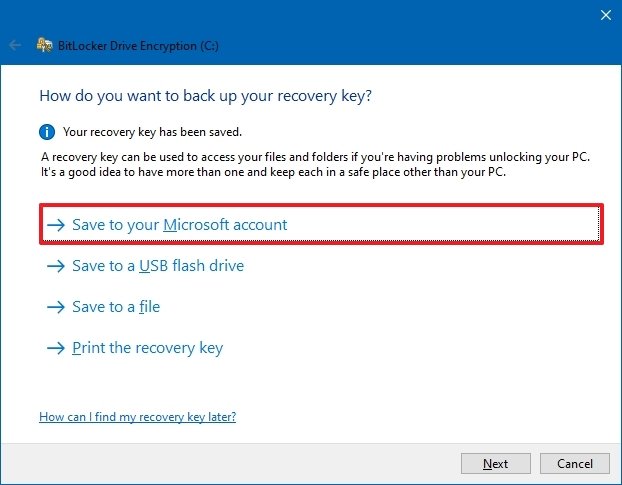
Select the choice to salve the recovery key:
- Relieve to your Microsoft account.
- Save to a USB flash drive.
- Save to a file.
- Print the recovery.
 Source: Windows Central
 - Click the Next push button.
-
Select how much the drive space to encrypt:
- Encrypt used disk infinite only (faster and best for new PCs and drives).
- Encrypt the entire drive (slower simply best for PCs and drives already in utilise).
Source: Windows Key - Choose between the 2 encryption options:


- New encryption mode (best for fixed drives on this device).
-
Compatible mode (best for drives that can be moved from this device).
Source: Windows Central - Click the Next button.
- Cheque the Run BitLocker system check choice.
Source: Windows Central - Click the Continue button.
- Click the Restart now button.
After you lot complete the steps, the computer will restart, and BitLocker will prompt you to enter your encryption password to unlock the drive.
How to enable BitLocker on stock-still data drives
To configure BitLocker on a secondary bulldoze, use these steps:
- Open Kickoff.
- Search for Control Panel and click the top result to open up the app.
- Click on System and Security.
-
Click on BitLocker Drive Encryption.
Source: Windows Central -
Under the "Fixed data drives" department, click the Plough on BitLocker option for the secondary drive.
 Source: Windows Central
 -
Bank check the Use a countersign to unlock the drive pick.
Quick note: You can as well use the Use my smart card to unlock the drive selection, but this is uncommon.
-
Create and confirm the password to unlock BitLocker and access your device.
 Source: Windows Central
 - Click the Next push button.
-
Select the option to save the recovery key:
- Save to your Microsoft account.
- Save to a USB flash bulldoze.
- Save to a file.
- Print the recovery.
Source: Windows Fundamental - Click the Next button.
-
Select how much the drive space to encrypt:
- Encrypt used disk space only (faster and best for new PCs and drives).
- Encrypt the entire drive (slower only best for PCs and drives already in use).
Source: Windows Cardinal -
Choose betwixt the two encryption options:
- New encryption manner (all-time for fixed drives on this device).
- Compatible mode (best for drives that can be moved from this device).
Source: Windows Central - Click the Next button.
-
Click the Outset encrypting button.
 Source: Windows Central
 - Click the Shut button.


Once you complete the steps, the drive will outset using encryption. If the drive already had data, the procedure could take a long time to complete.
How to enable BitLocker To Go on removable drives
Alternatively, you can also utilise the "BitLocker To Go" feature to encrypt removable drives (such every bit USB flash and external drives) connected to your reckoner.
To ready upward BitLocker To Get on a removable drive, use these steps:
- Connect the USB drive to the device.
- Open up Start.
- Search for Control Panel and click the acme issue to open up the legacy app.
- Click System and Security.
-
Click BitLocker Drive Encryption.
Source: Windows Central - Under the "BitLocker To Become" department, select the removable drive you want to encrypt.
-
Click the Turn on BitLocker option.
 Source: Windows Central
 - Bank check the Use a countersign to unlock the drive option.
-
Create a countersign to unlock the drive.
 Source: Windows Central
 - Click Next to go on.
-
Select the option to save the recovery key:
- Save to your Microsoft account.
- Save to a file.
- Impress the recovery.
Source: Windows Primal - Click the Side by side button.
-
Select how much the bulldoze infinite to encrypt:
- Encrypt used deejay infinite only (faster and best for new PCs and drives).
- Encrypt the entire drive (slower but best for PCs and drives already in employ).
Source: Windows Primal -
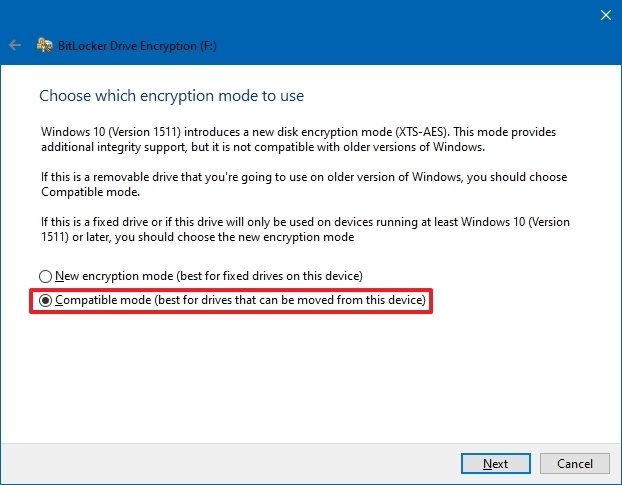
Choose between the two encryption options:
- New encryption mode (best for fixed drives on this device).
- Compatible mode (best for drives that can be moved from this device).
 Source: Windows Central
 Quick tip: In this case, the Compatibility mode is the recommended option.
- Click the Next button.
-
Click the Start encrypting button.
Source: Windows Key - Click the Close push button.


After you complete the steps, the encryption procedure will begin on the removable bulldoze.
When using encryption, always try to start with an empty drive to speed up the process, and so the data will encrypt quickly and automatically. In improver, similar to the feature of the operating system bulldoze, yous will get the same boosted options and a few more, including:
- Add smart card: This pick will allow you to configure a smart menu to unlock the removable drive.
- Turn on motorcar-unlock: Instead of having to type a password every fourth dimension y'all re-connect the removable drive, you can enable auto-unlock to admission your encrypted data without entering a countersign.
How to disable BitLocker on Windows 10
To remove the drive encryption, utilise these steps:
- Open Get-go.
- Search for Control Panel and click the top issue to open up the app.
- Click on Organisation and Security.
-
Click on BitLocker Drive Encryption.
Source: Windows Central -
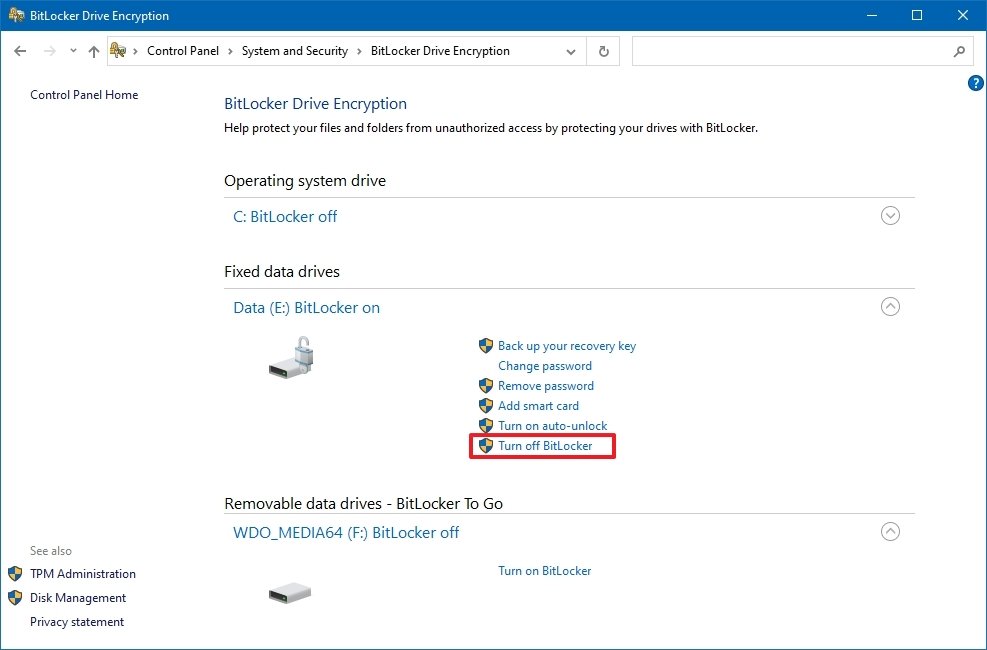
Click the Turn off BitLocker option for the drive you lot want to remove the encryption.
 Source: Windows Central
 - Click the Turn off BitLocker push.

Once you complete the steps, the decryption procedure will begin, and it volition accept some fourth dimension to complete depending on the amount of data.
More Windows ten resource
For more helpful articles, coverage, and answers to common questions about Windows 10, visit the post-obit resource:
- Windows x on Windows Central — All you need to know
- Windows x assist, tips, and tricks
- Windows 10 forums on Windows Central

How To Encrypt A Flash Drive Windows 10,
Source: https://www.windowscentral.com/how-use-bitlocker-encryption-windows-10
Posted by: berglundbethis.blogspot.com
0 Response to "How To Encrypt A Flash Drive Windows 10"
Post a Comment