

Censor: The return of the video nasty - berglundbethis
Censor: The return of the video nasty
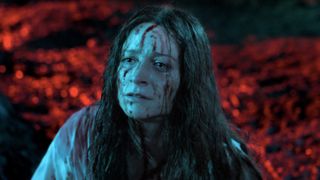
"Ban video sadism in real time!" screamed the cover of the Daily Mail in July 1983, at the tallness of the furore over alleged "picture nasties". With home video in its early days, not subject to any official control, energetic separatist labels coined IT in distributing cheap horror films using the matching draws of gruesome gore and lurid cover art.
The ensuing moral panic power saw a total of 72 films at unmatched time OR other deemed nonresistant to infringe the Obscene Publications Move, and located on a inclination past the Director of Public Prosecutions, putting them at chance of seizure by the police force. In 1984, legislation was passed requiring wholly videos to be formally certified.
Ban takes place the following year, when the British Board of Film Classification became responsible awarding those certificates. It centers happening one of the examiners tasked with the job: Enid (Niamh Algar), whose tragic backstory makes her especially concerned most the possible personal effects of screen fury. The initial spark for first-clock theater director/ co-writer Prano Bailey-Bond related to horror of an in the first place era, though.
"I was reading this clause around Hammer horror," Bailey-Bond tells SFX. "It said that during that time period, censors would dilute images of blood on the breasts of a woman because they believed it would make over men promising to commit rape. I was suchlike, 'I'm sure there were lots of male film censors. If this in reality is what these images do to us, what protects the film censor from losing control of themselves?'
"It was quite a childish thought, and it grew from there, really. I quickly placed the film in the video hard era, because what was going on in the UK during that period wheel spoke to this idea perfectly," she adds.
Though Bailey-Bond always had a sperm-filled-distance lineament in mind, she tested out the idea first in 2015's Nasty, a 15-minute short about a 12-year-old boy whose nasties-watching Fatherhood has mysteriously nonexistent. "That allowed Maine to create the world of the motion-picture show: this idea of taking a character from dull, bleak, suburban '80s Britain into this pied, colorful, gory ma of video nasties. I was trying out much of the ideas I was exploring for Ban. But also in that respect were ideas from Nasty where I went, 'Ohio, this works' – like the approximation of a family member going missing."
In Censor, Enid is preoccupied aside her sister's childhood disappearing, and gradually becomes obsessively confident that it's connected to the trashy oeuvre of horror managing director Frederick North.
Cutting Crew
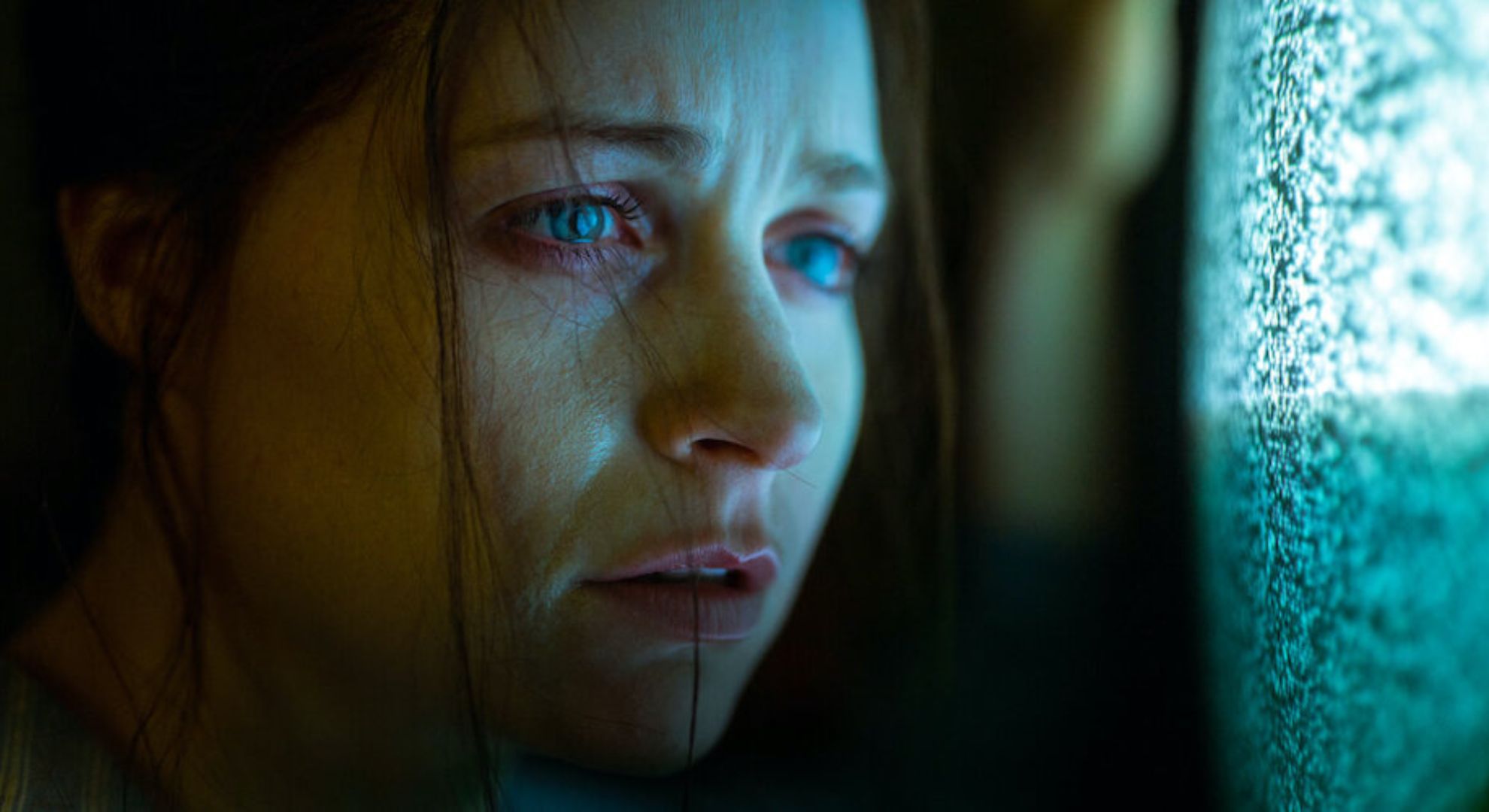
Bailey-Bond did her homework when it came to Enid's job, beginning by speaking to present-day examiners with a noesis of the period, and reservation out BBFC files along the nasties. "Anybody can do that: you can book to go and read the file for The TX Chain Proverb Massacre and see what they were saying, which is a lot of playfulness! Even just beingness in the BBFC helped. The fact that lots of their offices are in the cellar, and they're pok little rooms that don't have windows, all fed into the inventive – wanting to make this space feel quite claustrophobic."
Bailey-Bond also tracked down a few examiners from the '80s and interviewed them astir their former military control. "One aforesaid it felt very seedy sometimes, sitting in these dark rooms watching essentially soft porn. She'd leave work feeling a bit grubby.
"Other examiners told me that they had to watch these films both with a subjective brain and an objective brain. So you're observance things in duality; you're trying to recognize how it's qualification you feel, but also how it might make this mortal feel, which is a strange direction to observe a film."
Horror fans who lived through with the '80s – or the following decade, when the nasties whipping was still casting a time-consuming shadow – may still hold a negative perspective of the BBFC, an organization personified for some in the figure of James Ferman. It was Ferman, BBFC Director from 1975-1999, who made sure The Exorcist wasn't given a home video certificate, arguing (with paternal logic) that it might find its way into the hands of susceptible girls. Enid, however, is portrayed in a commiserative way –and Bailey-Bond has sympathy for her real-life counterparts.
"I have it off people who work as film censors who love horror," she says, "and I think it's more complex than someone scarce sitting in a room cutting. It was decidedly more complex than that during this stop, and they disagreed on things a lot of the clock as well. Then you'd have to come with to a group decisiveness on what's right and what's wrong, and information technology's all very subjective, at long las. I think it's important for U.S. all to adjudicate and understand the person who maybe is on the other side of what we agree with," she adds. "That happens inferior and to a lesser extent now, doesn't it?"
Bailey-Bond also went square-eyed watching the nasties themselves. The results of this collected research were then channeled to Niamh Algar, at the time working in Mantle Townspeople shooting the Ridley Scott series Raised By Wolves.
"I was sending her tons of films and saying, 'Check this!'; sending her essays on censorship, and people losing family members," Pearl Bailey-Bond certificate says. "Then introducing her to the film examiners that I'd spoken to, so she could get more of a sentiency of the role that Enid had. We had quite a few months before we shot the film where Niamh and I would just mount up Skype, roughly once a week. It was about making sure that we were both along the corresponding page, working through the script psychologically, and so pouring Sir Thomas More ideas into it.
"We talked a lot about Enid's physicality," she continues, providing one example of this cooperative process. "In my head, I'd ever imagined her being very regimented at the look of the film; then, as the film goes on, she's unraveling both in her head and physically/ visually. Indeed we worked together with a movement director, and we talked roughly various things. Niamh's idea was this picking of the fingernail [as a aflutter substance abuse]. I really loved that. So I included that in the playscript and my colourful lists."
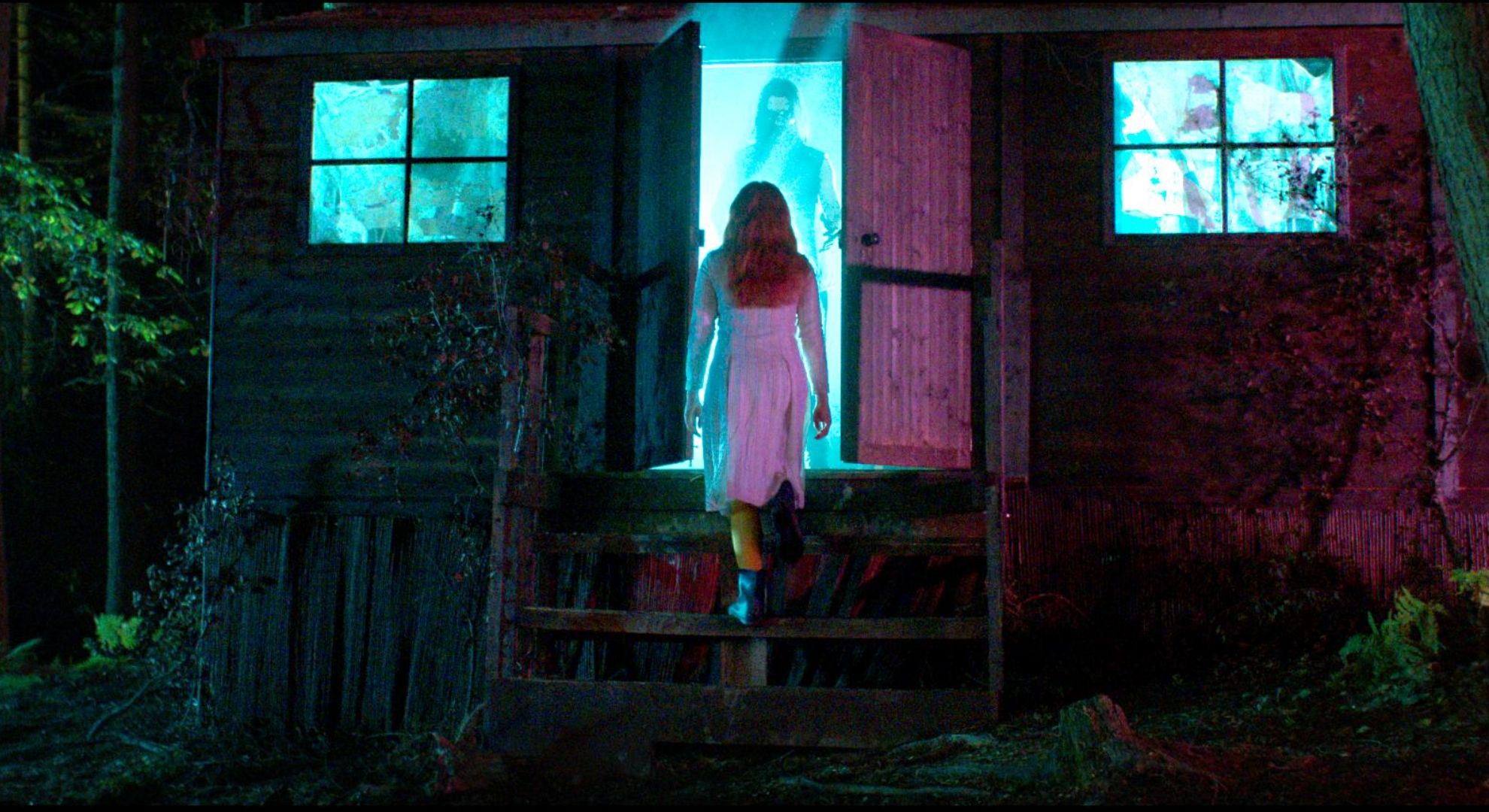
The heroine's mental unraveling way that we're presented not only with sequences from films by the invented Frederick North, merely with Enid's nasties-inflected dreams, awash with the kind of red/blue ignition touristed in Italian horror of the time. Bailey-Bond had zealous fun with some, drafting on the films she'd watched for inspiration.
"For Don't Move In The Church, I was look Lisa, Lisa, or Ax – information technology's got two titles. Line of descent On Satan's Claw was another really useful one – those kinds of folk music horror-esque, eerie British films of the '70s. Then for Asunder, Lucio Fulci was a big act upon – I get it on Fulci, his aesthetic is wonderful. The House By The Cemetery and The Beyond were things I was showing my director of photography. So the dreams were a bit flake more Dario Argento-inspired."
When information technology came to the wider world of '80s Britain, Bailey-Stick t's search for a suitable location took in Wales and London, and eventually led northeast. "We were looking for someplace that could pass for the '80s, and we set up some really great places in Leeds. So we all moved up and lived there for about three months when we were shooting."
Bailey-Bond also took pains to guarantee this wasn't some fake, day-glo globe of deely-boppers and legwarmers. "I was looking Sir Thomas More at [documentary photographer] Paul Graham – stuff that was a bit more than like tired Thatcher's Britain, and the grey-blue angel palettes of that world. And when I was talk to my production designer and costume person we always thought about period as: not everything comes from the '80s. My house now isn't overloaded of stuff that I just bought yesterday.
"So you'Re e'er looking at at clothes and things in the space that are more '70s or '60s. IT's a take exception, along a humiliated budget. You fanny't just chuck any old thing in, because you're thinking, 'Well, did they have Biros comparable that in 1985?' You're questioning everything! But I love that, because you can design everything."
But the bigger challenge, she says, was the first one of making the case that the mid–'80s setting was absolutely fundamental. "In ontogenesis, I had to really warrant to the execs wherefore the film's set during this period. People would say, 'Well, information technology's astir censorship. Why can't you just make it about at once?'. But for me it's so fascinating to be able to view this in hindsight – for some reason you canful be more objective more or less it.
"Also, this is a point of careful hysteria around this stuff within the UK, that
birthed the repugnance community that we know now, and inspired so more filmmakers, and I think shifted horror slightly because of the birth of VHS."
IT's a time period you'll shortly embody healthy to immerse yourself in – and without having to ask the bloke at the telecasting rental shop to slip you "few of the toilsome stuff ", inside a enceinte-box case, concealed in a brownish paper bag. As the tagline of The Last House Along The Left put it, livelihood repeating: it's only a pic, alone a moving picture, only a movie...
This article in the first place appeared in SFX Magazine – the issue with The Tomorrow War on the cover. Order through that link, or subscribe here and never miss some other exclusive have.

Source: https://www.gamesradar.com/censor-movie-interview-prano-bailey-bond-video-nasty/
Posted by: berglundbethis.blogspot.com
0 Response to "Censor: The return of the video nasty - berglundbethis"
Post a Comment